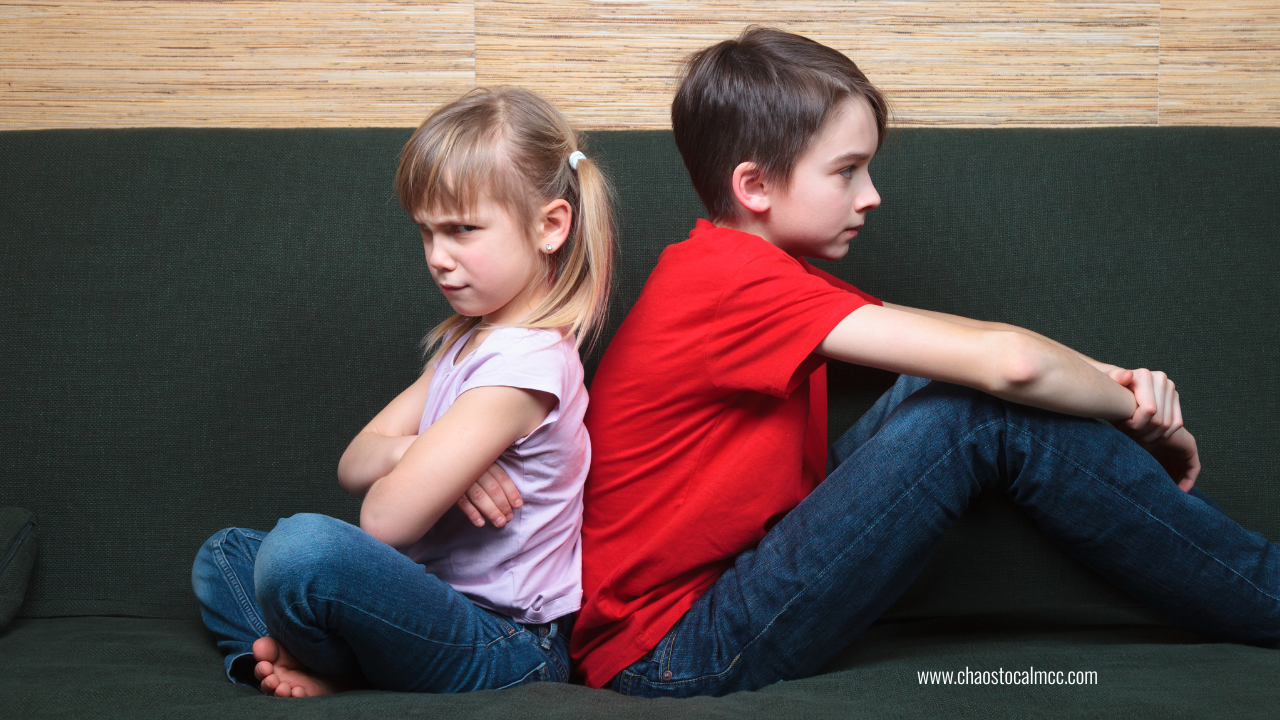

If you have more than one child, you’ve likely lived this moment more times than you can count:
You’re in the kitchen.
You hear arguing.
Then yelling.
Then crying.
Then the unmistakable sound of the kids running up to tell you all the things the other one did wrong.
Before they can reach you, you call out from the other room:
“Work it out!”
Or if they do make it to you, you tell them they’re old enough to figure it out on their own.
And for a brief moment, things settle…
Until they explode again.
If this sounds familiar, you’re not failing.
You’re doing what many well-intentioned parents have been told is good parenting.
The problem is – when it comes to sibling rivalry, this advice often makes things worse.
What “Working It Out” Actually Teaches Kids
When parents step back during sibling conflict, the goal is usually positive:
- Teach problem-solving
- Encourage independence
- Avoid over-intervening
But here’s the reality most families experience:
When kids are told to “work it out” while dysregulated, they don’t practice ignoring it, or talking it out, or walking away, or finding something else to do.
In fact, they probably don’t really use any of the tools or strategies they could tell you in those calm moments they “should” be doing.
Instead, they practice power.
The child who:
- Yells louder
- Hits harder
- Intimidates more
- Or manipulates more subtly
…wins.
Over time, this teaches very clear lessons:
- Escalation works
- Aggression pays off
- Provocation without consequences is effective
That’s not conflict resolution.
That’s rehearsal.
The Real Issue Isn’t Conflict – It’s Leadership
Sibling conflict itself is not the problem. It’s a normal part of living with someone day in and day out.
The problem is what happens when there’s no clear leader in the moment of conflict.
Many parents unintentionally slide into more of a concierge role:
- Trying to keep everyone happy
- Stepping in only when things get out of control
- Mediating instead of setting standards
- Investigating instead of intervening
This isn’t because parents don’t care.
It’s because they’ve been told sibling rivalry is “normal” and should mostly be ignored, or that kids need to figure out how to handle it on their own.
Here’s the truth:
Staying out of it isn’t “giving them space” – it’s abdicating leadership.
Sibling rivalry is common – but unmanaged rivalry becomes a power struggle.
And if you don’t set the power structure, your kids will.
Your Home Is a Training Ground, Not a Battleground
Your house is the first place your kids learn:
- How to handle frustration
- How to assert themselves
- How to respond to conflict
- How power and boundaries work
That means your home needs clear rules of engagement.
Your House, Your Rules of Engagement
Your home should be a place of safety. For you and your kids.
Physical aggression and verbal attacks are not “just part of growing up.”
They’re violations of the that house standard, and signal that skills are missing and leadership is required.
This doesn’t require harshness.
It requires clarity and calm, confident leadership.
Leadership Means Enforcing Standards – Not Solving the Case
One of the most exhausting parts of sibling conflict for parents is trying to figure out:
- Who started it
- Who meant what
- Who’s lying
- Who’s exaggerating or just being overly dramatic
Here’s the shift that changes everything:
You don’t need to know who started it to know that the standard was clearly broken.
Leaders don’t debate intent.
They enforce expectations.
At the end of the day, intentions don’t matter if someone’s safety is at risk or they’re crossing a line that’s never okay to cross.
The No-Negotiation Protocol for Sibling Conflict
This is a far more effective approach to managing sibling rivalry – and teaching respectful and cooperative behaviour over time. This approach removes drama, manipulation, and escalation – and replaces it with predictability and safety.
Step 1: Immediate Separation
No yelling.
No lecturing.
No emotional speeches.
Separate your kids into different rooms right away.
This stops the behaviour, and lowers emotional intensity.
Teaching doesn’t happen during chaos.
Step 2: Shared Accountability
If a toy, screen, or activity triggered the conflict, that item is removed for a set period of time.
Both kids lose access.
This does two powerful things:
- Removes the incentive to bait or intentionally trigger the other sibling
- Stops parents from feeling like they need to become detectives
The message is clear:
Conflict costs everyone.
Regardless of intentions. Regardless of “who started it”. Regardless of who reacted more intensely.
Step 3: Reset Before Repair
Discussion only happens once everyone is calm.
If respectful communication isn’t possible yet, separation continues.
That’s not punishment – it’s regulation support.
Repair and conflict resolution comes after self-control, not before.
What This Actually Teaches Kids
This approach doesn’t suppress conflict.
It teaches:
- Emotion regulation
- Accountability
- Respect for boundaries
- Predictable cause-and-effect
Most importantly, it teaches that:
“This home is safe, and someone’s in charge.”
That safety is what allows real learning to happen.
The Bigger Goal
This isn’t just about reducing sibling fighting.
It’s about raising kids (and eventually, teenagers and adults) who can:
- Disagree without exploding
- Advocate without attacking
- Handle frustration without manipulation
Those skills don’t develop through passivity or “working it out” on their own.
They develop through intentional leadership, and taking advantage of opportunities for learning.
Final Thought
If sibling conflict is running your home right now, it doesn’t mean you’re doing something wrong.
It means your kids need more structure, not more freedom in moments of dysregulation.
You don’t need to referee.
You don’t need to judge.
You don’t need to solve every argument.
You need to lead.
👉🏼 If you want the full, step-by-step system for ending power struggles and restoring calm, join the Transforming Defiance waitlist.
Leadership changes everything.
Connect with us
If you’re ready to work with us in-clinic, schedule your free consult call today. Or if you’re looking for more quality parenting information to help transform your child’s defiance to cooperation, join our course waitlist.
We look forward to connecting with you.
© Chaos to Calm Counselling & Consulting Ltd.